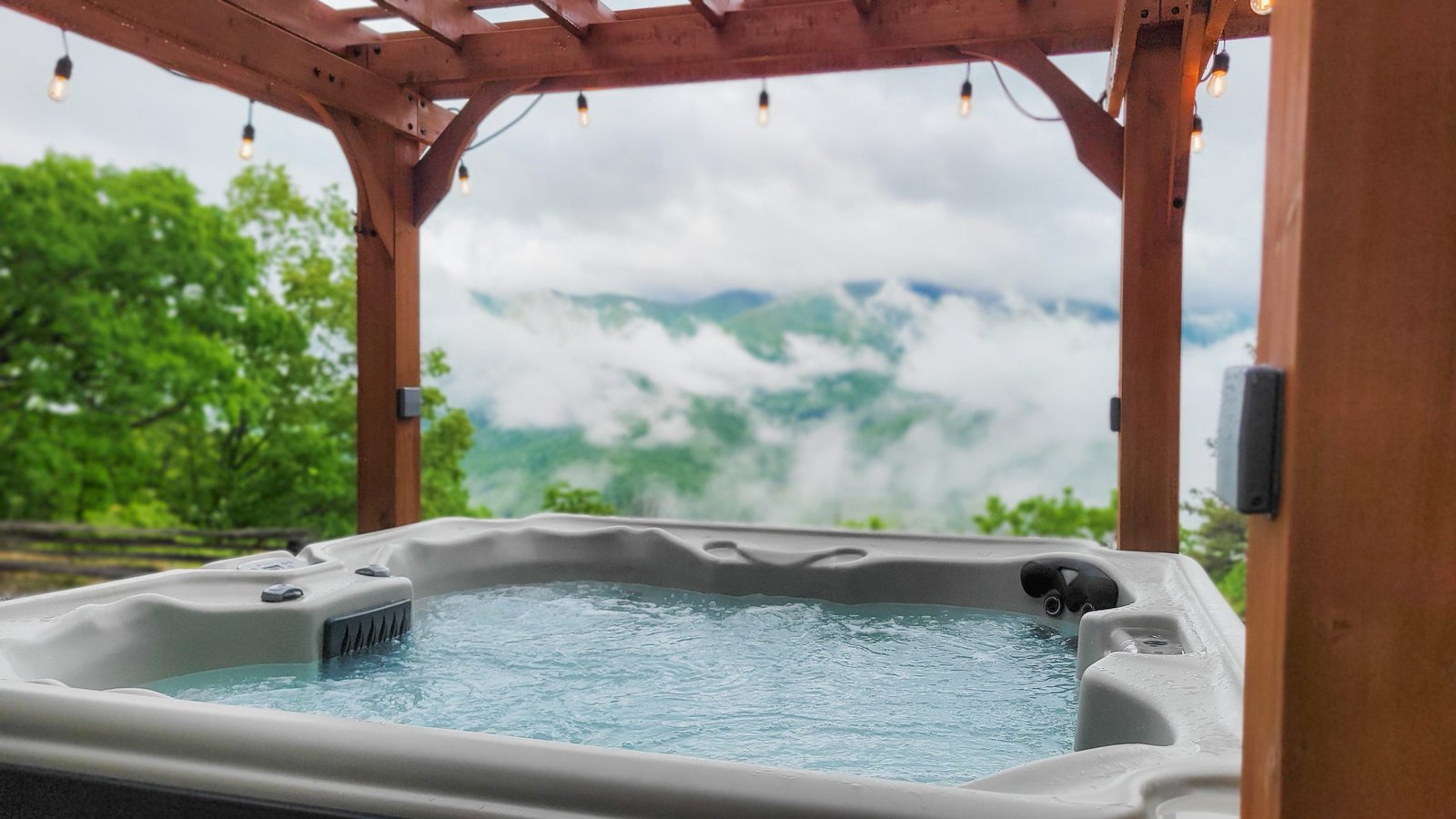
You flip the cover back, check the temperature, and realize the water is lukewarm at best. The jets are working. The lights are on. Everything else looks fine. But the heat isn’t there.
This is one of the most common service calls we get — and the good news is that a spa not heating properly is almost always fixable. Most of the time it traces back to one of a handful of causes that follow a predictable pattern. Work through them in order and the majority of heating problems get resolved without needing to replace major components.
Here’s a structured troubleshooting guide that starts with the simplest checks and works toward the more complex ones.
Before assuming something is broken, run through these basic checks. More heating problems than you’d think get resolved at this stage.
It sounds obvious, but check the thermostat setting on the control panel first. Settings get bumped accidentally — by kids, by covers being dragged across the panel, by power cycles that reset to a lower default. Make sure the temperature is actually set to where you want it and not to 97 or 98 degrees when you’re expecting 104. The maximum safe temperature for a spa is 104 degrees Fahrenheit — the heater won’t push past that regardless of the setting.
The Ground Fault Circuit Interrupter breaker is a safety device required by electrical code for all spas. It trips to cut power when it detects a ground fault or electrical anomaly — and a failed heater element is one of the most common reasons it trips. Go to the breaker panel and look for the spa breaker. If it’s tripped, it will be in a middle position between on and off. Reset it by pushing it fully to the off position first, then back to on. If it trips again immediately or within a few minutes, there’s an electrical fault that needs professional diagnosis. Don’t keep resetting a breaker that keeps tripping.
Also check the GFCI outlet on the spa pack itself — it has a test and reset button similar to what you’d see on a bathroom outlet. If the red button is popped out, press it in to reset.
Most modern spas display error codes when something is wrong. Common ones related to heating include FL, FLO, or FLC — indicating a water flow problem. OH means the water has overheated and the safety shutoff triggered. SN or SNS points to a sensor error. HH or HOT means the water temperature is already at or above the high limit. Check your owner’s manual for the specific codes your spa uses — they’re the fastest way to narrow down what the system thinks is wrong.
If a code appears, address what it’s indicating before trying to run the heater again. Running through a heating problem with an active error code active usually doesn’t work and can cause additional damage.
A spa heater absolutely requires adequate water flow to operate safely. Without it, the heater element would overheat and burn out almost immediately. Multiple safety mechanisms — the pressure switch, the flow sensor, and the high limit switch — all exist to shut the heater down when flow is insufficient. When any of them detects low flow, they cut the heater off. So if your spa has stopped heating, low water flow is statistically the most likely cause.
If the water level has dropped below the skimmer intake or the minimum fill line, the pump is pulling air instead of water. This reduces flow enough to trip the safety shutoffs. Check the water level and top it up to the correct level — typically at or just above the midpoint of the skimmer opening. Then reset power to the spa and see if it begins heating.
A clogged filter is probably the single most frequent cause of spa heating problems. The filter restricts water flow as it loads up with debris, skin cells, oils, and scale. Most spa manufacturers recommend rinsing the filter monthly and doing a thorough chemical soak every two to three months. If it’s been longer than that — or if you can’t remember the last time the filter was serviced — pull it out, rinse it thoroughly with a garden hose, and try running the spa without the filter temporarily to see if it begins heating. If it heats without the filter, the filter was the problem. Clean it properly or replace it before running the spa with it reinstalled.
Airlocks — pockets of air trapped in the plumbing — are common after refilling a spa and can completely block water flow even when the pump sounds like it’s running. The pump will hum and run but move little to no water, which trips the flow sensors and shuts the heater down.
To clear an airlock, locate the union fitting near the pump — it’s a threaded connection that can be loosened by hand or with a wrench. With the pump running, loosen the union slightly until water begins to trickle out, which bleeds the trapped air out of the line. Once water flows steadily, retighten the union. Some spa packs have a dedicated air bleed valve for this purpose. Check your owner’s manual for the specific procedure for your model.
If any shut-off valves in the plumbing system were partially or fully closed — during winterization, after a repair, or accidentally — water flow will be restricted. Check that all slice valves and diverter valves are fully open. This is easy to overlook and takes thirty seconds to verify.
If water flow checks out — the water level is fine, the filter is clean, there’s no airlock, all valves are open — the issue may be with the heating element itself or the components that control it.
Hard water causes calcium and mineral deposits to build up on the heating element over time. A thick layer of scale acts as insulation, reducing the element’s ability to transfer heat into the water. The element works harder, draws more current, and eventually either trips the high limit switch or burns out entirely.
Scale buildup is visible as a white or gray crust on the element. On older spas with accessible elements, it can sometimes be cleaned with a descaling solution. On newer spas with the element encased in a stainless tube, scale buildup is harder to see but can be confirmed with resistance testing using a multimeter. If scale has caused the element to fail, replacement is the fix.
Heating elements burn out for a few reasons — operating without adequate water flow even briefly, scale insulation causing overheating, age, or a short in the element’s coating. A failed element typically either shows an open circuit (no continuity) or a short (element shorted to ground, which usually trips the GFCI breaker). Testing with a multimeter confirms which it is. An element that’s open won’t heat at all. One that’s shorted will trip the breaker every time power is applied.
Heating element replacement is a straightforward repair for a qualified spa technician and a manageable DIY task for someone comfortable working around water and electricity. The element needs to match the spa’s specifications — voltage, wattage, and physical dimensions. Using the wrong element creates problems even if it fits the housing.
The high limit switch is a safety device that cuts power to the heater when water temperature reaches a dangerous level — typically between 110 and 120 degrees Fahrenheit. If it trips, the heater won’t run until it’s reset. On most spa packs, there’s a small red button on the heater assembly that resets the high limit switch. It’s often recessed and requires a pen or small screwdriver to press.
If the high limit keeps tripping without the water actually getting that hot, the switch itself may be faulty. A malfunctioning high limit switch reads a falsely elevated temperature and shuts the heater down prematurely. These are inexpensive parts and straightforward to replace once confirmed as the cause.
The pressure switch monitors water pressure in the heater housing and shuts the heater down if pressure drops below a safe threshold. The flow sensor does a similar job by detecting whether water is actually moving through the system. Either of these can fail or go out of calibration and shut the heater down even when flow is adequate.
A failed pressure switch or flow sensor is typically confirmed by the process of elimination — flow is confirmed adequate, the element is intact, but the heater still won’t run. Replacement is the fix. These are relatively inexpensive components but the diagnosis needs to be correct before replacing them, since the same symptoms can have multiple causes.
The thermostat and temperature sensors tell the heater when to turn on and when to stop. If they’re reading the water temperature incorrectly, the system either never calls for heat (because it thinks the water is already at temperature) or runs continuously and overheats (because it can’t detect the actual temperature).
A sensor that’s reading 20 degrees high will prevent the heater from activating even in cool water because the system believes the water is already warm enough. A sensor reading that seems implausibly high — 120 or 130 degrees on a spa that’s been sitting unused overnight — is almost certainly a failed sensor rather than actual water temperature.
Temperature sensors are generally inexpensive and straightforward to replace. The challenge is confirming that the sensor is the problem rather than another component. Cross-referencing the control panel’s displayed temperature against a separate thermometer dipped in the water is a quick first check — if the panel reads 108 degrees and the water is clearly cool to the touch, the sensor is lying to the system.
Older spas use mechanical thermostats rather than digital sensors. These are adjustable and can drift out of calibration over time. They can sometimes be adjusted back into range, but a failed mechanical thermostat needs replacement.
A spa that heats but can’t maintain temperature — or takes unusually long to reach the set point — may not have a heater problem at all. It may have an insulation problem. An old, waterlogged, or damaged cover loses heat faster than the heater can replace it, particularly in cooler weather.
Spa covers absorb water over time through normal use. A cover that started out weighing 25 pounds can triple in weight as it soaks up water, becoming a poor insulator instead of the good one it was when new. Lift the cover and check its underside for tears, separated foam, or moisture. If it’s heavy and obviously waterlogged, replacing the cover is likely to make a noticeable difference in both heat retention and energy costs.
Also check the cover’s seal around the spa edges. Gaps where the cover doesn’t sit flush — from warping, from the cover clips not holding it down, or from damage — allow heat to escape steadily. A cover in decent shape that isn’t sealed properly performs almost as poorly as a damaged one.
The control board is the spa’s central processing unit — it receives signals from the sensors, interprets them, and tells the heater and pump what to do. When the control board fails, the signals don’t get through correctly and the heater may not activate even when every other component is functioning properly.
Control board failures tend to show up as erratic behavior — intermittent heating, error codes that don’t correspond to any identifiable problem, components that work sometimes but not others. Moisture and corrosion are the most common causes. Rodents are another — wiring that’s been chewed is a surprisingly common finding when a spa stops working unexpectedly.
Inspecting the board visually for burn marks, corrosion, or damage is the first step. Control board replacement is one of the more expensive spa repairs, so confirming the board is actually the problem before replacing it is important. This is generally where professional diagnosis pays for itself — misdiagnosing a board issue and replacing a perfectly functional board is a costly mistake.
Loose, corroded, or damaged wiring can interrupt power to the heater without tripping a breaker or throwing an error code. Connections that were fine when the spa was installed can loosen from vibration over time. Rodent damage — chewed insulation, severed wires — is more common than most spa owners realize, particularly when a spa is installed near vegetation or has been unused for an extended period.
A visual inspection of the wiring in the spa equipment compartment can reveal obvious problems. Look for burnt or discolored wire insulation, loose connections at the heater terminals, and any obvious physical damage. If anything looks suspect, this is work for a professional — high-voltage electrical systems combined with water proximity require proper training and equipment to work on safely.
Some of the checks in this guide are things any spa owner can do safely — checking water level, cleaning the filter, resetting a breaker, checking for error codes. Others involve working inside the equipment compartment with electrical components, and a few require test equipment like a multimeter and the knowledge to use it correctly.
The honest boundary is this: if the issue involves electrical components beyond resetting a breaker — heater element testing, board diagnosis, wiring inspection, sensor replacement — getting a professional involved is the safer and usually the cheaper path. Misdiagnosis on spa electrical work can lead to replacing expensive components that weren’t the actual problem. It can also create safety hazards in a system that combines high voltage with water.
If you’ve worked through the flow checks and basic resets and the spa still isn’t heating, that’s the point to call. At Spas and More, we diagnose and repair spa heating problems regularly. Give us a call and we’ll figure out what’s going on.
Most of the causes of heating failure are preventable with regular maintenance. Clean the filter monthly and soak it every two to three months. Keep the water level at the correct fill line. Test and balance water chemistry regularly — water that’s too aggressive corrodes heating components faster and deposits scale on elements. Drain and refill the spa every three to four months to remove the buildup of dissolved solids that accumulate with regular use. Inspect the cover periodically and replace it when it starts to waterlog. Keep the area around the equipment compartment free of vegetation that might invite rodents.
A spa that gets consistent basic maintenance heats reliably, lasts longer, and almost never needs emergency service calls. One that gets attention only when something goes wrong spends a lot more time cold and a lot more money on repairs.
If you’ve worked through this guide and your spa is still not heating properly — or if you’d rather have a professional diagnose it from the start — give Spas and More a call. We service and repair spas of all makes and models and can usually identify the problem on the first visit.
(423) 337-1859
spasandmore.net
timspasandmore@gmail.com
Monday through Friday, 8:00 AM to 8:00 PM.